What's Holding Back Workplace Safety Engagement? We Asked 100 Safety Professionals.
Author: Sensori Safety Published: 11/15/2026 Time: 5 Minutes
Workplace safety has come a long way. Organizations have access to more safety technologies, training resources, digital platforms, and educational content than ever before. Yet one challenge continues to show up across industries:
How do we keep employees engaged in safety beyond formal training?
It's a question worth asking. Safety professionals spend considerable time developing programs, conducting inspections, investigating incidents, and making sure employees understand workplace hazards. But even with those efforts, maintaining meaningful safety conversations throughout the workday isn't always easy. At Sensori Safety, we wanted to better understand some of these challenges directly from the people working in the field. Through our Safety Fails LinkedIn community, we asked two questions about safety videos and the adoption of new safety technology.
Here's what we learned. The Challenge Isn't Always Finding Safety Content. It's Getting Employees Engaged. Our first LinkedIn poll asked:
"What's your biggest challenge with safety videos?"
With 119 responses, the results were:
- Getting employees engaged - 39%
- Finding relevant safety videos - 34%
- Downloading or accessing clips - 16%
- Sharing videos with teams - 11%
Employee engagement was the most frequently selected challenge. That's worth thinking about. Safety professionals can have access to hundreds of videos, presentations, and training materials. But having content available doesn't necessarily mean employees will connect with it. Think about the last safety meeting you attended. Did employees participate in the conversation? Did they ask questions? Did they recognize something from their own work environment? Or did everyone watch the presentation, sign the attendance sheet, and return to work?
There's a difference between showing employees safety content and creating an opportunity for them to think about safety. Sometimes, a short video showing a real workplace incident can lead to a meaningful conversation.What went wrong? What could have prevented it? Could something similar happen in our facility? Those questions can make safety more relatable to the work employees perform every day.
Introducing New Safety Technology Comes With Its Own Challenges
Our second poll asked: "What's your biggest challenge when introducing new safety technology at work?"
As of November 12, 2026, the poll had received 117 responses.
- Getting leadership approval - 28%
- Cost and budget limitations - 27%
- Getting employees to use it - 26%
- Proving it actually works - 18%
Results were preliminary at the time of reporting. Percentages are rounded. What stood out was how closely the responses were distributed.
Leadership approval, budget limitations, and employee adoption were all significant concerns. And that makes sense. Introducing another platform into an organization isn't always as simple as purchasing a subscription. Safety professionals may need to explain the business value, secure funding, introduce the technology to supervisors, and encourage employees to participate. Meanwhile, leadership wants to understand whether the investment will provide meaningful benefits.
These challenges raise an important question: Are we making safety technology easier for organizations to use, or are we creating another administrative responsibility? It's something technology providers, including Sensori Safety, need to consider.
What Safety Professionals Are Telling Us Beyond the Polls
The conversations surrounding safety videos have been just as valuable as the poll results. Some professionals have emphasized the importance of short, relatable videos that reflect hazards employees actually encounter. Others have discussed difficulties accessing content for workplace presentations or finding updated materials relevant to their operations. One recurring theme is that safety content becomes more useful when employees have an opportunity to discuss what they're seeing rather than simply watching it.
These observations reinforce something we've believed for a long time: Safety engagement shouldn't be measured only by how much information organizations distribute. We should also pay attention to whether employees are participating in the conversation. Of course, these LinkedIn polls represent voluntary responses from our community. They aren't representative industry studies, and they don't establish how effective any particular technology will be. But they provide useful perspectives from people who encounter these challenges.
Keeping Safety Conversations Going Beyond Training
Formal safety training plays an important role in helping employees understand hazards, procedures, and expectations. But safety doesn't stop when a training session ends. Employees encounter changing conditions, new tasks, equipment issues, and unexpected hazards throughout their workday. Supervisors need practical ways to keep safety visible without turning every conversation into another lengthy training session. That might involve discussing a recent near miss, recognizing an employee who identified a hazard, or using a short video to introduce a toolbox talk. The goal isn't necessarily to add more meetings or more paperwork. It's to make existing safety conversations more meaningful.
Why We Developed SafeEngage 360
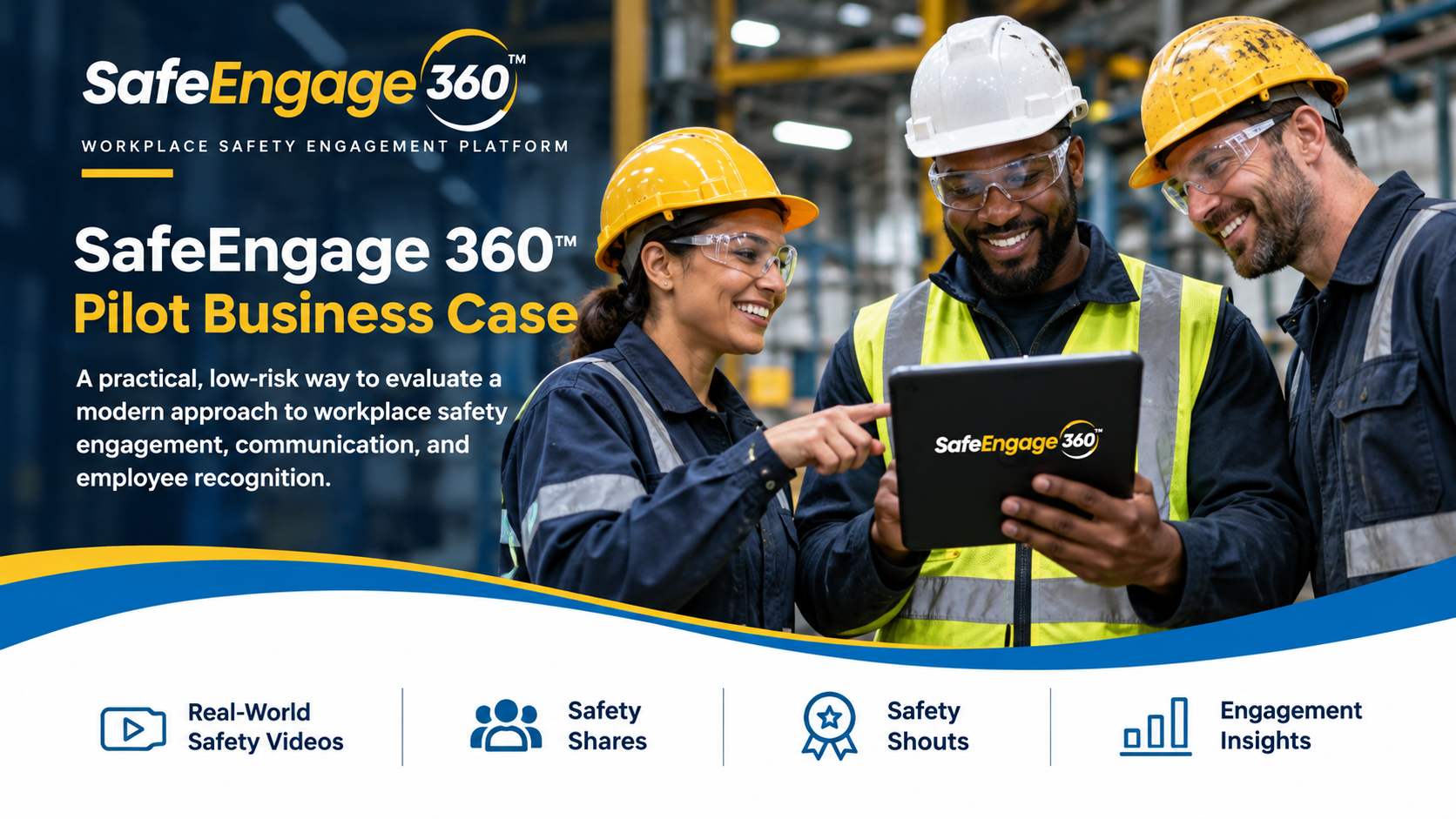
These are some of the challenges that led us to develop SafeEngage 360, a workplace safety engagement platform from Sensori Safety.
SafeEngage 360 brings together real-world safety videos, Safety Shares, employee recognition through Safety Shouts, and engagement insights. The platform is designed to help safety leaders and supervisors find relevant content, share safety messages, recognize positive behaviors, and review participation. It's not intended to replace an organization's learning management system or existing EHS management software. Instead, it focuses on an area that can sometimes receive less attention: keeping employees involved in everyday safety conversations. As we continue introducing SafeEngage 360 to organizations, we're interested in understanding how these tools fit into real workplace routines. That includes listening to supervisors, gathering employee feedback, and learning what organizations find useful.
Could a 30-Day Pilot Help Organizations Make Better Decisions?
One thing our second poll highlighted is that introducing safety technology involves more than identifying a problem. Organizations also need a practical way to evaluate potential solutions. That's why we're exploring structured 30-day SafeEngage 360 pilots with participating organizations. Rather than assuming a platform will automatically improve safety performance, a pilot can help answer more practical questions:
- Can supervisors easily find relevant safety content?
- Are employees participating in the shared activities?
- Does the platform fit existing safety meetings and daily routines?
- What do supervisors and employees think about the experience?
- Is there enough value to consider broader implementation?
These are questions organizations can evaluate before deciding whether a platform makes sense for their operations.
A pilot won't automatically prove reductions in injuries or establish financial return on investment. But it can provide useful information about adoption, usability, and engagement.
The Future of Safety Engagement Starts With Listening
Technology will continue to change how organizations manage workplace safety. Artificial intelligence, digital platforms, mobile applications, and new communication tools will create additional opportunities. But regardless of how advanced these tools become, organizations still face a fundamental challenge.
How do we get people involved in safety in a way that feels relevant to their everyday work?
The answer may look different from one organization to another. For some teams, it may involve better communication. For others, more relatable content, stronger supervisor involvement, or greater recognition of positive safety behaviors. At Sensori Safety, we believe understanding those challenges is an important part of developing better solutions. And sometimes, that process starts with something as simple as asking safety professionals what they're experiencing.
We'd Like to Hear From You
What's the biggest challenge your organization faces when trying to keep employees engaged in safety? Is it finding relevant content, getting employees involved, securing leadership support, or something else? We welcome your perspective. To learn more about SafeEngage 360 and how it supports everyday workplace safety engagement, visit: https://safeengage360.com
Sensori Safety — Helping organizations keep safety conversations going beyond training.
Research note: Poll results were collected through the Safety Fails LinkedIn community in October and November 2026. Participation was voluntary, and findings should be interpreted as directional feedback rather than representative industry research.
#SensoriSafety #OSHA #safetytech #safetyblog #safetyfirst #workersafety #safetytips #safetyprofessionals #safetyprofessional #ehscommunity